These two phrases are used interchangeably in ordinary conversation, and in a real emergency that habit is dangerous, because the two events look different, feel different, and need completely different things from a bystander. A heart attack is a blocked pipe. A cardiac arrest is a failed circuit. One person is awake and frightened and needs an ambulance; the other is on the floor and needs your hands on their chest within seconds. Telling them apart takes about thirty seconds and no equipment at all, and it is probably the single most useful piece of medical knowledge a non-medical person can carry.
Two different failures in the same organ
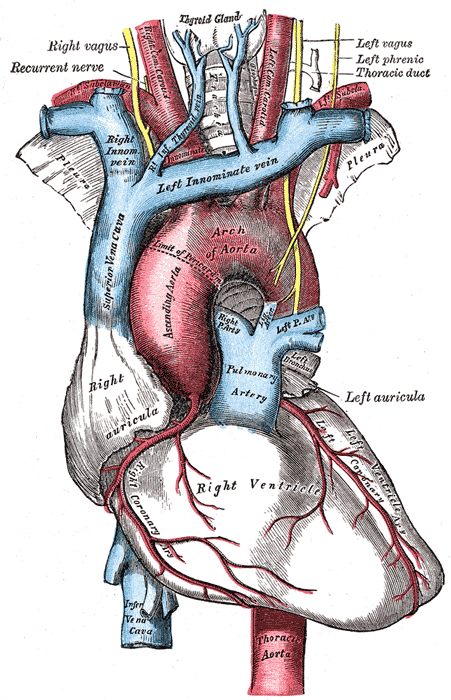
A heart attack, properly a myocardial infarction, is a supply problem. One of the coronary arteries running across the surface of the heart becomes blocked, almost always because a fatty plaque in its wall has cracked open and a clot has formed on the crack within minutes. Everything downstream of that point stops receiving blood, and the muscle it fed begins to die. The person remains conscious throughout. The classic presentation is heavy central chest pressure, often described as a band, a weight or a vice rather than a sharp pain, spreading to the jaw, neck, back or either arm, with sweating, nausea, breathlessness and a grey pallor. It builds over minutes and does not go away with rest.
That classic pattern is only the most common one. Roughly a third of heart attacks present without chest pain at all, and the people most likely to have one of those are women, adults over 75, and anyone with diabetes, whose autonomic nerves may no longer transmit cardiac pain reliably. In them, the whole event can present as sudden crushing fatigue, breathlessness on mild effort, indigestion that antacids do not touch, or a vague sense of dread. These are sometimes called silent heart attacks, which is misleading; they are not silent, they simply speak in a different vocabulary, and they cause exactly the same damage.
A cardiac arrest is not a supply problem but a rhythm problem: the electrical system that coordinates the heart collapses, the muscle either quivers uselessly or stops, and blood flow ceases immediately. The presentation is unmistakable once you know it. The person collapses without warning, does not respond to shouting or a firm shake, and is not breathing normally. What confuses people is that many arrest victims do keep making noise — slow, irregular, snoring or gasping sounds called agonal breathing, which can continue for several minutes. It looks like breathing and it is not. A heart attack can trigger a cardiac arrest, and it is the most common single cause, but most heart attacks do not, and many cardiac arrests happen in people who were never having one.
What each one does to the circulation
In a heart attack the circulation keeps running, damaged. Blood pressure is usually maintained, the brain stays perfused, and the person can tell you what is wrong. The damage is local and progressive: a core of muscle dies quickly, and around it lies a rim of stunned but living tissue that is still salvageable if flow returns. That rim is what emergency treatment exists to save, which is why the entire hospital system is built around the phrase time is muscle. Opening the artery with a catheter, ideally within 90 minutes of arrival, rescues tissue that would otherwise have been lost, and every hour of delay costs a measurable slice of the person's future heart function.
In a cardiac arrest the circulation stops. Within about ten seconds the person loses consciousness because the brain, which has no oxygen store worth the name, has already burned through what was in transit. Coronary and cerebral perfusion pressures fall to zero. Two rhythms account for most survivable arrests: ventricular fibrillation, in which the ventricles quiver at 300 or more disorganised impulses a minute and eject nothing, and pulseless ventricular tachycardia. Both are correctable by a single well-timed electric shock, which does not restart the heart so much as stop it — it depolarises the whole muscle at once so the sinoatrial node can take charge again.
The arithmetic of arrest is brutal and simple. With no bystander intervention, the chance of survival falls by roughly 7 to 10 per cent for every minute that passes. Chest compressions slow that clock dramatically, because they generate 20 to 30 per cent of a normal cardiac output — not enough to wake anyone up, but enough to keep the heart and brain in a shockable, recoverable state until a defibrillator arrives. This is the reasoning behind the chain of survival: early recognition and call, early CPR, early defibrillation, then advanced care. The first two links belong to whoever is in the room, and they matter more than everything that follows.
Why heart muscle does not grow back
Cardiomyocytes are among the most energy-hungry cells in the body and among the least replaceable. Up to a third of their internal volume is mitochondria, and they run almost entirely on aerobic metabolism, oxidising fatty acids, glucose and lactate continuously rather than storing much of anything. When their artery closes, anaerobic glycolysis takes over within seconds, lactate accumulates, intracellular pH falls, and contraction in that territory stops after roughly 60 seconds — long before any cell has actually died. Reversible injury lasts about 20 to 30 minutes. After that, membrane damage becomes permanent, calcium floods the cytoplasm, and proteases and phospholipases digest the cell from the inside. The critical fact is what happens next: adult human cardiomyocytes renew at well under one per cent a year, far too slowly to rebuild a lost territory. The dead muscle is replaced by fibroblasts laying down collagen. Scar is mechanically strong, which prevents the wall from rupturing, but it cannot contract and it cannot conduct, so the function lost in those first hours is lost permanently, and the electrically inert scar becomes the substrate for arrhythmias years later.
Dating the damage under the microscope
A pathologist can date a myocardial infarction from a slide with surprising precision, and the timeline is a good way to understand why speed matters. In the first four hours there may be nothing visible at all under a light microscope, even though the tissue is already committed. From four to twelve hours the fibres become wavy where they are stretched by their still-contracting neighbours, and early coagulative necrosis appears. From twelve to twenty-four hours the cytoplasm turns intensely eosinophilic and contraction bands appear, especially at the margins where blood has partly returned. Between one and three days the nuclei disappear, the striations blur, and dense sheets of neutrophils move in. Through the first week macrophages clear the debris; by one to two weeks granulation tissue with new capillaries and plump fibroblasts fills the gap; and by around two months that has matured into a pale, dense, acellular collagen scar. The scar is permanent and is exactly what an echocardiogram later sees as a region that does not move.
What to do for each one
For a suspected heart attack, call the emergency number immediately — 999, 911, 112 or the local equivalent — and say the words chest pain, because those words move the call up the queue. Have the person sit down and stay still, loosen tight clothing, and stay with them. Do not let them walk to a car or drive themselves; a significant proportion of deaths happen in the first hour, and an ambulance can begin treatment and defibrillate on the spot if the rhythm fails. The call handler may advise chewing aspirin if the person is not allergic and has been told to keep it; follow their instruction rather than deciding alone. If the person has been prescribed a nitrate spray, help them use it as prescribed.
For a collapse, check two things and only two things. Shout and shake the shoulders: do they respond? Then look at the chest and listen at the mouth for no more than ten seconds: are they breathing normally? If the answer to both is no, that is a cardiac arrest, whatever noises they may be making. Call the emergency number, put the phone on speaker, and start chest compressions. Heel of one hand in the centre of the chest, the other hand on top, elbows locked, shoulders directly above your hands; push straight down 5 to 6 centimetres, at 100 to 120 a minute, letting the chest recoil fully between compressions. Do not stop to check for a pulse and do not stop because they gasp. If you are untrained, compressions alone are the recommended approach and are far better than doing nothing.
Send someone else for the nearest public access defibrillator while you keep compressing, and never leave the person to fetch one alone if there is anyone else present. Switch it on as soon as it arrives and follow the spoken instructions; the device analyses the rhythm itself and will not shock a heart that does not need it, so it cannot be used to harm someone. Bare the chest, dry it if it is wet, and place the pads as shown on them. Defibrillation within three to five minutes of collapse can give survival rates of 50 to 70 per cent, against roughly one in ten overall for out-of-hospital arrest. Continue compressions between shocks and until the ambulance crew takes over or the person clearly wakes up.
Common questions about cardiac arrest and heart attack
What is the main difference between cardiac arrest and a heart attack?
A heart attack is a circulation problem: a coronary artery is blocked and heart muscle starts to die, but the person is awake and breathing. Cardiac arrest is an electrical problem: the heart stops pumping, so the person collapses, does not respond and is not breathing normally. A heart attack needs an urgent ambulance. Cardiac arrest needs an ambulance plus immediate chest compressions and a defibrillator, because survival falls by around 7 to 10 per cent for every minute without them.
Can a heart attack cause a cardiac arrest?
Yes. A heart attack is the most common single trigger for cardiac arrest, because the dying and irritable muscle around the blocked artery can set off ventricular fibrillation. But the two are not the same thing: most heart attacks do not progress to arrest, and many cardiac arrests are caused by other things entirely, including inherited rhythm disorders, cardiomyopathies, electrolyte problems, drowning, drug overdose and electrocution.
How do I know when to start CPR?
Two checks. Shout and gently shake the shoulders — if there is no response, that is the first. Then spend no more than ten seconds looking for normal breathing. If breathing is absent, or is only occasional noisy gasping, start chest compressions immediately and have someone call the emergency number and fetch a defibrillator. You do not need to check for a pulse, and you should not delay to do so; even trained clinicians are unreliable at finding one under pressure.
What is a silent heart attack?
It is a myocardial infarction that occurs without the classic crushing chest pain, and it is common rather than rare. The symptoms are still there but are easy to dismiss: sudden severe fatigue, breathlessness on light effort, indigestion or upper abdominal discomfort, jaw or back ache, nausea, cold sweating. The heart damage is identical to a painful heart attack, and because people wait longer before calling for help, the outcome is often worse.
Selected references
- Panchal AR, Bartos JA, Cabañas JG, et al. Part 3: Adult Basic and Advanced Life Support: 2020 American Heart Association Guidelines for CPR and Emergency Cardiovascular Care. Circulation. 2020;142(16_suppl_2):S366-S468.
- Olasveengen TM, Semeraro F, Ristagno G, et al. European Resuscitation Council Guidelines 2021: Basic Life Support. Resuscitation. 2021;161:98-114.
- Thygesen K, Alpert JS, Jaffe AS, et al. Fourth Universal Definition of Myocardial Infarction (2018). Circulation. 2018;138(20):e618-e651.
- Gräsner JT, Herlitz J, Tjelmeland IBM, et al. European Resuscitation Council Guidelines 2021: Epidemiology of cardiac arrest in Europe. Resuscitation. 2021;161:61-79.
- Kumar V, Abbas AK, Aster JC. Robbins and Cotran Pathologic Basis of Disease. 10th ed. Elsevier; 2021.
- Hall JE, Hall ME. Guyton and Hall Textbook of Medical Physiology. 14th ed. Elsevier; 2021.
Medical disclaimer. This article is written for education and general understanding. It is not medical advice and cannot replace assessment by a qualified healthcare professional. If you have symptoms or health concerns, speak with a clinician. Read the full disclaimer.