Most illness gives you time. A small number of conditions do not, and they are the ones worth learning by heart. When the heart stops, brain cells begin to die in about four to six minutes. When an artery to the brain blocks, roughly 1.9 million neurons are lost every minute it stays blocked. When sepsis takes hold, the chance of survival falls measurably for each hour that effective treatment is delayed. In all three, the outcome is usually decided before anyone reaches a hospital — by whoever is standing there, and by whether they recognised what they were looking at. That makes recognition a skill rather than a qualification, and it is a skill anyone can learn in an afternoon.
The six emergencies that cannot wait
Cardiac arrest and a heart attack are not the same event, and confusing them costs lives. A heart attack is a plumbing problem: a coronary artery blocks, and the muscle it feeds begins to die while the person stays awake, usually in pain. The classic pattern is heavy central chest pressure spreading to the jaw, neck or left arm, with sweating, nausea and breathlessness. Women, older adults and people with diabetes more often have no crushing pain at all — only breathlessness, exhaustion, or indigestion that will not settle. Cardiac arrest is an electrical problem: the heart stops pumping altogether. The person collapses, does not respond, and is not breathing normally. Occasional noisy gasping, called agonal breathing, is a sign of arrest rather than a sign of life, and it is the most commonly missed clue in the whole of emergency medicine.
Stroke is an interruption of blood supply to part of the brain, either from a clot or a bleed, and the word that matters is sudden. The FAST test covers most of them: Face, has one side dropped; Arms, can both be raised and held; Speech, is it slurred or muddled; Time, call the emergency number immediately. Beyond FAST, treat sudden loss of vision, sudden loss of balance or coordination, and a thunderclap headache that reaches its worst within seconds as the same emergency. Anaphylaxis, by contrast, announces itself within minutes of a trigger — a food, a drug, a sting. Look for swelling of the lips, tongue or throat, a hoarse voice or noisy breathing, wheeze, widespread hives, sudden pallor and faintness, and a person who says that something terrible is about to happen. That sense of impending doom is a recognised clinical sign, not anxiety.
Sepsis is the body's response to an infection turning on its own organs, and it hides behind an ordinary illness. The warning signs in an adult are slurred speech or new confusion, extreme shivering or severe muscle pain, passing no urine for most of a day, severe breathlessness, mottled or discoloured skin, and the feeling that this is worse than any illness before it. Any of those, in someone with a known or suspected infection, is an emergency. Major external bleeding is the most visually obvious of the six and still the most often mishandled: blood that spurts, pours, pools on the floor, or soaks through clothing will not stop on its own. A rash that does not fade when a glass is pressed against it belongs on the same list, because it can mean meningococcal disease, which can kill a healthy person within hours.
Why minutes matter
Every one of these emergencies is, underneath, a failure to deliver oxygen. The brain is about two per cent of body weight and consumes roughly twenty per cent of the body's oxygen, and it stores almost no fuel of its own. When circulation stops, neuronal ATP falls within seconds. The sodium-potassium pump, which alone consumes more than half of a neuron's energy budget, fails; the cell can no longer hold its ionic gradients; it depolarises, swells, and floods with calcium. That is why the window in cardiac arrest is measured in minutes rather than hours. Chest compressions generate only twenty to thirty per cent of a normal cardiac output, which sounds hopeless until you realise it is enough to keep the surviving margin of tissue alive until a defibrillator arrives.
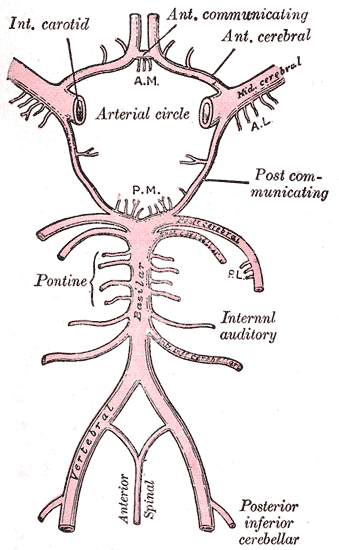
Stroke makes the arithmetic of time explicit. At the centre of a blocked territory the tissue is already lost, but around it sits the ischaemic penumbra: cells that are electrically silent yet still alive, kept going by collateral flow through the circle of Willis. Those cells are the entire target of emergency stroke treatment. Restore flow and they recover; leave them and they are recruited into the infarct, hour by hour. Quantified, an untreated large-vessel stroke destroys about 1.9 million neurons and 12 kilometres of myelinated fibres every minute, ageing the affected brain roughly 3.6 years for each hour of delay. Clot-dissolving drugs generally work within four and a half hours of onset, and mechanical clot retrieval can help selected patients up to 24 hours, which is why the time the person was last seen well is the single most valuable thing a bystander can record.
Sepsis and anaphylaxis fail differently: the pump and the pipes give way at once. Inflammatory mediators dilate arterioles and make capillaries leak, so blood volume ends up in the wrong compartment, perfusion pressure falls, and tissues stop receiving oxygen even though the blood itself is fully oxygenated. This is distributive shock. In anaphylaxis, intramuscular adrenaline reverses all three problems simultaneously — alpha-1 receptors constrict the vessels and restore pressure, beta-2 receptors open the airways, and further mast cell degranulation is damped down — which is why it works within minutes and why nothing else substitutes for it. In sepsis, the equivalent lever is early antibiotics and fluid: in septic shock, each hour of delay before effective antimicrobial therapy has been associated with a marked fall in survival. The physiology keeps saying the same thing. The treatment is rarely more complicated than the delay; the delay is the disease.
The cells that die first
Tissues die in a predictable order, set by how much energy each cell type needs and how little it can store. Neurons go first, within minutes: they hold no meaningful glycogen reserve, they run an enormous ion-pumping bill, and when they depolarise they release glutamate into the synapse, which over-excites their neighbours and drives calcium into them as well — excitotoxicity, a cell death that spreads outward. Cardiomyocytes follow within twenty to thirty minutes, then the proximal tubule cells of the kidney, then hepatocytes; skeletal muscle, skin and connective tissue tolerate hours. Inside a dying cell the sequence is the same everywhere. ATP falls and the pumps stop. Sodium and water enter, and the cell swells. Calcium floods in and switches on proteases, phospholipases and endonucleases that digest the cell's own membranes, cytoskeleton and DNA. Mitochondria then open their permeability transition pores and abandon the ATP production that might have reversed any of it. Restoring blood flow remains the only treatment, but it is not free: reperfusion delivers oxygen to damaged mitochondria, which release a burst of free radicals and destroy a further margin of tissue. That is reperfusion injury, and it is why the goal is never simply to restore flow, but to restore it early.
What too late looks like under the microscope
Pathology puts a clock on all of this. In the brain, irreversibly injured neurons become red neurons — shrunken, intensely eosinophilic cell bodies with pyknotic nuclei — visible from about six to twelve hours after the insult. The brain is then the one organ that undergoes liquefactive rather than coagulative necrosis, because it holds little collagen and a great deal of lipid, so infarcted tissue softens, is cleared by macrophages over weeks, and leaves a fluid-filled cavity walled off by reactive astrocytes. That cavity is permanent, and the lost function is lost with it. In the heart the pattern is coagulative necrosis, and it can be dated: wavy fibres and contraction bands in the first few hours, loss of nuclei and striations with dense neutrophil infiltration at one to three days, macrophages and granulation tissue through the first two weeks, and a dense collagenous scar by around two months. Scar holds the wall together but cannot contract or conduct, which is why the functional loss is permanent and why later arrhythmias so often arise at its border. In the kidney, acute tubular necrosis shows sloughed epithelial cells and granular casts filling the tubules — the one appearance on this page that is genuinely recoverable, because tubular epithelium regenerates if the person survives long enough to let it.
What to do before help arrives
Call first, and call before you do anything else. Give the location before the story, because the location is what dispatches the ambulance and everything after it is refinement. Put the phone on speaker so your hands stay free, and expect the call handler to talk you through what to do — they are trained for exactly this, and following them beats improvising. Unlock the door and turn on the outside lights. If you suspect a stroke, note the time the person was last seen completely well and give the crew that number, because it decides which treatments are still available. Do not drive someone to hospital yourself if there is any chance of cardiac arrest: an ambulance carries a defibrillator and starts treatment on the driveway, and a car does neither.
For a collapsed adult who does not respond and is not breathing normally, start chest compressions. Kneel beside them, place the heel of one hand in the centre of the chest with the other hand on top, lock your elbows, and push straight down 5 to 6 centimetres at a rate of 100 to 120 compressions a minute, letting the chest come all the way back up between each one. Push hard, push fast, and do not stop until help takes over. If you are untrained or unwilling to give rescue breaths, compressions alone are effective and far better than hesitating. Send someone for the nearest public defibrillator and switch it on the moment it arrives — it speaks its instructions aloud and will not deliver a shock to a heart that does not need one. Defibrillation within three to five minutes of collapse can produce survival rates of 50 to 70 per cent, and every minute of delay costs roughly seven to ten per cent of that chance.
For anaphylaxis, use the adrenaline auto-injector immediately into the outer thigh, through clothing if necessary, and call an ambulance even if the person improves, because symptoms can return hours later. Lay them flat with their legs raised; do not stand them up or sit them upright, since that alone can be fatal in someone whose blood pressure is already failing. A second dose can be given after five minutes if there is no improvement. For severe bleeding, press hard directly on the wound with both hands and do not lift off to look; if a limb keeps bleeding heavily, apply a tourniquet high above the wound, tighten until the bleeding stops, and write down the time. For suspected sepsis, say the word “sepsis” out loud to the call handler and again to the clinician who sees you, and mention any recent infection, surgery or wound — the word itself changes how quickly the patient is assessed. Across all six: keep the person still, give nothing to eat or drink, and stay until the crew arrives.
Common questions about medical emergencies
What is the difference between a heart attack and cardiac arrest?
A heart attack is a blocked coronary artery: heart muscle starts to die, but the person is usually awake, in pain and still breathing. Cardiac arrest is an electrical failure in which the heart stops pumping entirely, so the person collapses, does not respond, and is not breathing normally. A heart attack needs an ambulance. Cardiac arrest needs an ambulance plus immediate chest compressions and a defibrillator, because without them the chance of survival falls by roughly 7 to 10 per cent for every minute that passes.
When should I go to the emergency room instead of urgent care?
Go to the emergency department, or call an ambulance, for anything that could threaten life, a limb or sight: chest pain lasting more than a few minutes, sudden weakness or difficulty speaking, severe difficulty breathing, heavy bleeding that will not stop, a first or prolonged seizure, a sudden severe headache, a non-fading rash, or new confusion in someone with an infection. Urgent care is designed for problems that are not dangerous but should not wait days, such as sprains, minor cuts, mild infections and low-grade fevers. If you are weighing it up in the middle of the night and one of the six warning-sign patterns fits, call. Emergency services would far rather assess someone who turns out to be well.
What are the warning signs of sepsis in an adult?
Slurred speech or new confusion, extreme shivering or severe muscle pain, passing no urine for most of a day, severe breathlessness, skin that is mottled, blotchy or discoloured, and a feeling that this illness is unlike anything before it. Any one of these in a person with a known or suspected infection is a medical emergency. Sepsis often looks like a bad case of flu at first, so the deciding question is not how the illness started but how quickly it is getting worse.
What should I do while waiting for an ambulance?
Stay with the person and keep them still and calm. Unlock the door, switch on outside lights, and clear a route for a stretcher. Gather any regular medicines and allergy information, and for a suspected stroke, the time they were last seen well. Give nothing to eat or drink, because it complicates anaesthesia and is dangerous if swallowing is affected. If they stop responding and are not breathing normally, begin chest compressions immediately and send someone for the nearest public defibrillator. Stay on the line with the call handler, who can guide you through each step.
Selected references
- Panchal AR, Bartos JA, Cabañas JG, et al. Part 3: Adult Basic and Advanced Life Support: 2020 American Heart Association Guidelines for CPR and Emergency Cardiovascular Care. Circulation. 2020;142(16_suppl_2):S366-S468.
- Olasveengen TM, Semeraro F, Ristagno G, et al. European Resuscitation Council Guidelines 2021: Basic Life Support. Resuscitation. 2021;161:98-114.
- Saver JL. Time is brain — quantified. Stroke. 2006;37(1):263-266.
- Powers WJ, Rabinstein AA, Ackerson T, et al. Guidelines for the Early Management of Patients With Acute Ischemic Stroke: 2019 Update. Stroke. 2019;50(12):e344-e418.
- Singer M, Deutschman CS, Seymour CW, et al. The Third International Consensus Definitions for Sepsis and Septic Shock (Sepsis-3). JAMA. 2016;315(8):801-810.
- Evans L, Rhodes A, Alhazzani W, et al. Surviving Sepsis Campaign: International Guidelines for Management of Sepsis and Septic Shock 2021. Critical Care Medicine. 2021;49(11):e1063-e1143.
- Kumar A, Roberts D, Wood KE, et al. Duration of hypotension before initiation of effective antimicrobial therapy is the critical determinant of survival in human septic shock. Critical Care Medicine. 2006;34(6):1589-1596.
- Cardona V, Ansotegui IJ, Ebisawa M, et al. World Allergy Organization Anaphylaxis Guidance 2020. World Allergy Organization Journal. 2020;13(10):100472.
Medical disclaimer. This article is written for education and general understanding. It is not medical advice and cannot replace assessment by a qualified healthcare professional. If you have symptoms or health concerns, speak with a clinician. Read the full disclaimer.